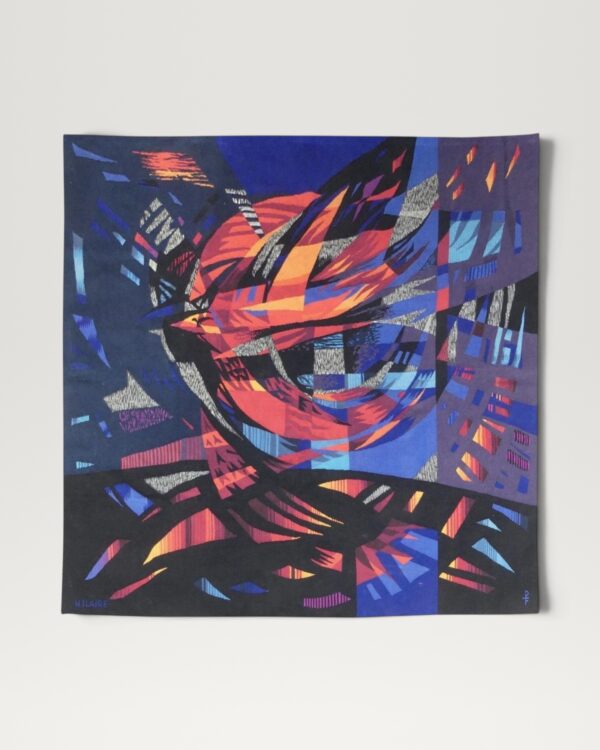
Camille Hilaire
Born in Metz on 2 August 1916, Camille Hilaire was self-taught at first, copying Dürer's engravings in his home town's municipal library. His drawings caught the eye of Jean Giono and the painter Nicolas Untersteller, who helped him gain a place at the École des Beaux-Arts in Paris. During the Occupation he enrolled there under an assumed name, and went on to study with André Lhote.
From Lhote he took a Cubist-derived construction of form, softened by colour laid down in broad planes. Landscapes, nudes, circus scenes and views of Venice or Normandy run through a body of work that moves from painting to watercolour and lithography (Le Cirque, 1974). He also produced tapestry cartoons, woven in Aubusson, notably by the Pinton workshop, some of them published by the Galerie Verrière in Lyon, which issued Hilaire, œuvre tissé in 1970.
He taught at the École des Beaux-Arts in Nancy from 1947, then in Paris at the École nationale supérieure des Beaux-Arts from 1958. The Musée de la Cour d'Or in Metz devoted an exhibition to him in 1991, and the Université Toulouse III Paul-Sabatier holds two of his works, La Chimie (1974) and La Nature (1978). He died on 7 June 2004.